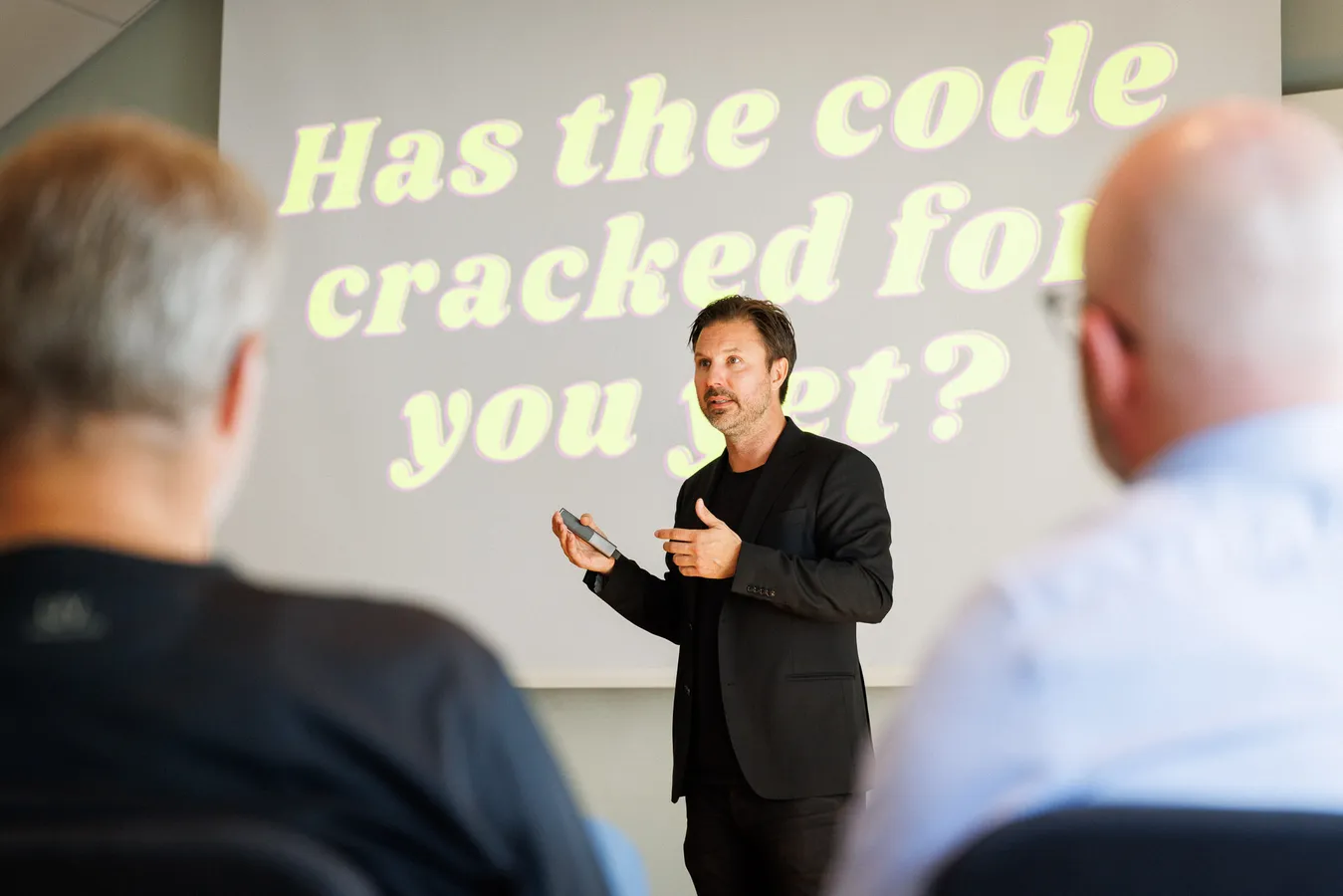
The Hard Part Has Moved
When technology stops being the bottleneck
- Format
- Keynote in Swedish or English
- Length
- 45–60 minutes, then time for questions. For leadership teams 60–75 minutes.
- Suits
- Conferences, customer events, kickoffs and leadership teams
- Approach
- Examples and perspectives adapted to your audience
What happens when something that took months can be done in an afternoon, and what we have learned to see as hard suddenly becomes possible? When AI can do the work, build the solutions and turn ideas into reality, we need to reconsider both our ingrained ways of working and our own role.
With concrete examples from what I build and test myself, and from hundreds of companies I have worked with, I show what AI already makes possible and the questions it raises for companies and people. What is worth doing? Where is our expertise needed? And what do we need to dare to rethink?
What the audience takes away
- 01
A clearer picture of what AI already makes possible and how it can change your own work.
- 02
Better questions about ingrained ways of working, human expertise and the decisions we need to own.
- 03
Curiosity and the nerve to try something they had written off.
It starts with the tools.
Then it gets real.
Most organisations start by asking which AI tools to use. Quite soon they notice it is about more than that. Roles change, the strategy is challenged and familiar patterns are questioned. And it gets uncomfortable, because this is not how we have worked before.
- Who does what now?
- What happens to the roles we have?
- Does our strategy hold?
- How do we actually do this?
These are not theories. I have met these questions in hundreds of companies, and they are what the talk starts from.
We have now had Mathias from Mindact with us several times, for different audiences, and every time the audience has been just as fascinated.
Four questions the talk revolves around.
When AI changes what we can do, we also need to reconsider what we choose to do, how we work and where our own expertise is needed.
- The possibilities
What becomes possible when old limits disappear?
With examples from what I build and test myself, I show how AI can change the conditions for solving problems and realising ideas. When things that used to demand large resources become easier to do, even ideas we have already dismissed can be worth trying again.
- The decisions
When we can do more, what is worth doing?
More possibilities put higher demands on our choices. I look at how we judge what deserves our time and money, and why ingrained ways of working can live on even though the conditions have changed. Being able to do something faster is also a chance to ask why we do it.
- The work
What happens when AI is given tasks to carry out?
When AI can carry out tasks in several steps, it affects how we organise the work. I show how that changes the interplay between people and systems, what we can hand over and what we ourselves need to be able to judge and take responsibility for.
- The people
What happens to us when our expertise gets a new role?
When AI can do tasks we have spent years mastering, it raises questions about both professional pride and the future. I explore where experience and judgement make a difference, and how we can create curiosity and courage in a change that can also feel uncertain.
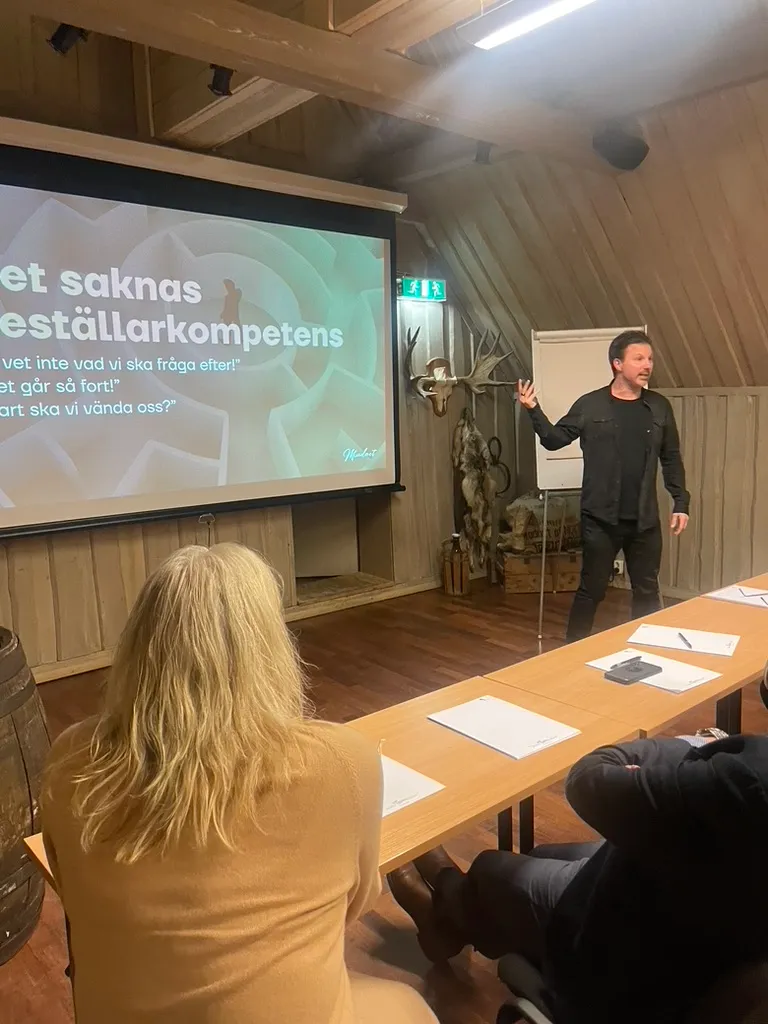
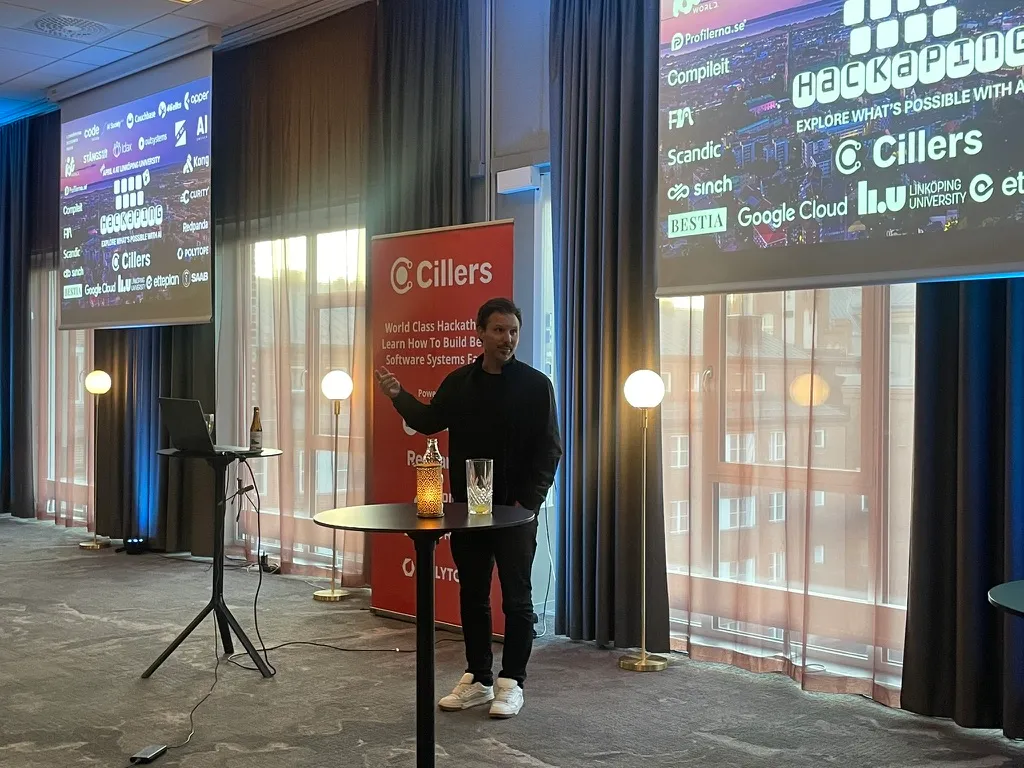
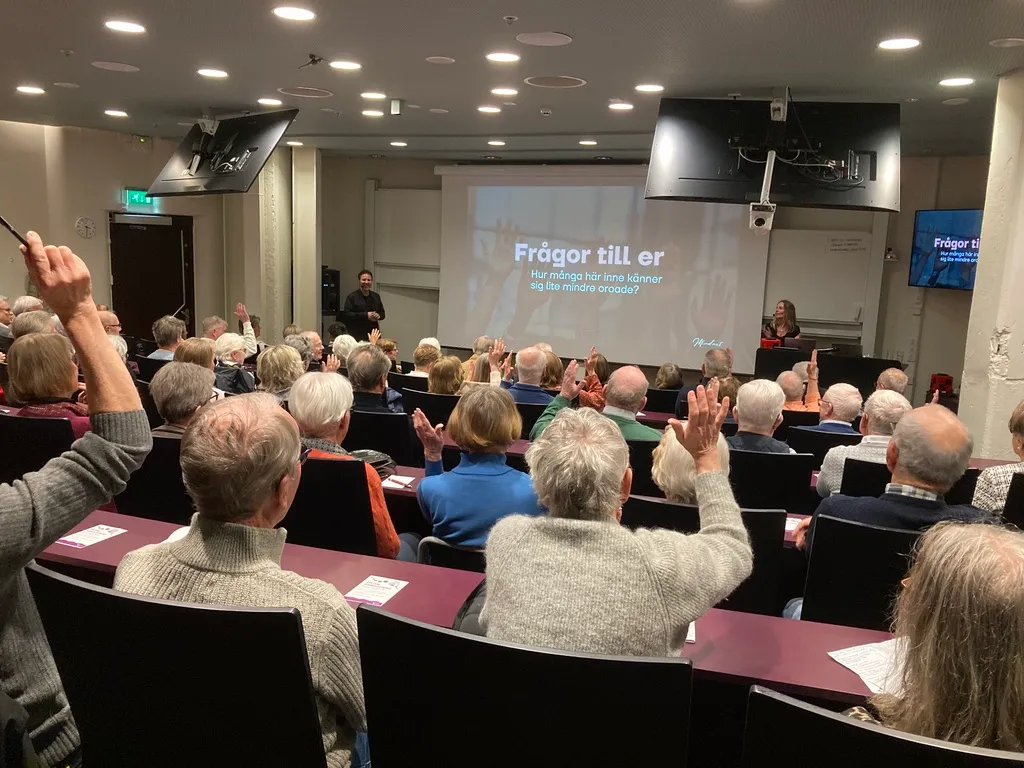
The examples come from my own work and what we are building at Mindact. I adapt them to your audience and leave room for humour, questions and objections.
The same brief. Very different prices.
In the talk I use an example where several suppliers received the same brief. The difference between the highest and the lowest quote is one million kronor.
1,000,000kr
What explains the difference? And how does the buyer know what is actually worth paying for? The example becomes the starting point for a discussion about how we judge proposals, compare solutions and ask better questions.
“Mathias Karlsson explained, in a way that was both clear and fascinating, what the new technology has in store for us.”
Read the full testimonial
“The audience was completely floored by Mindact's talk on the highly topical subject of AI at Värnamo Näringsliv's breakfast meeting. Mathias Karlsson explained, in a way that was both clear and fascinating, what the new technology has in store for us.”
“There was no mistaking Mathias Karlsson's genuine enthusiasm and knowledge of the subject.”
Read the full testimonial
“It was a very interesting and eye-opening introduction to the world of AI, presented at Vandalorum in Värnamo. There was no mistaking Mathias Karlsson's genuine enthusiasm and knowledge of the subject, and I can promise that nobody in the audience was left unmoved.”
Common questions.
How long is the talk?
45–60 minutes, then time for questions. For leadership teams it is often 60–75 minutes, with more room for conversation.
Can it be given in English?
Yes. I speak in Swedish or English.
Is it adapted to our audience?
Yes. We have a short call beforehand, so the examples and questions fit your industry and the people in the room.
Can it be given online?
Yes, but it works best in person. Online works well for shorter sessions and spread-out teams.
Where are you based?
In Värnamo, Sweden. I speak all over Sweden, and travel and any accommodation are included in the quote.
What does it cost?
It depends on the format, length and travel. Tell me about the occasion and I will come back with a proposal and a price.
Who sends the invoice?
The assignment is delivered and invoiced by Mindact Solutions AB, which I co-founded. Their booking terms apply.
Can we record the talk?
Usually, yes. Let me know in advance and we will agree on how the recording may be used.
How quickly will we hear back?
Usually within a day.


Bring this talk to your event
Tell me about the occasion, the audience and what you want them to leave with. I will come back with a suggested format.